
A black and white gallery wall can make a room feel thoughtfully designed without adding more color or clutter. The trick is not to buy matching prints. It is to give different pieces a shared visual rhythm through their frames, spacing and subject matter.
Whether you love minimalist black and white art, photography or bold abstract shapes, these nine ideas will help you build a display that feels personal. You will also find practical advice on sizing, arranging and hanging your artwork.
9 Black and White Gallery Wall Ideas
Table of Contents
1. Start with a simple three-print row
For a narrow wall, hang three similarly sized prints in a straight line. Try one abstract shape, one architectural photograph and one line drawing. Matching frames make the mix feel deliberate. This is a good first gallery wall because you only need to align three pieces.
2. Mix minimalist line art with photography
Thin line drawings leave plenty of white space, while photographs add texture and depth. Combine a portrait, a cityscape and a simple botanical drawing. Choose photos with similar contrast so one image does not overpower the others.
3. Make one large print the focal point
Anchor the arrangement with a larger black and white artwork, then place two or four smaller pieces nearby. The largest work gives the eye somewhere to rest. This approach works particularly well above a sofa or console table.
4. Create a balanced grid
A grid of four or six frames suits modern and minimalist rooms. Keep the frames the same size, line up their edges and use consistent gaps. The artwork can vary as long as the overall palette stays monochrome.
5. Try an organic, collected-over-time layout
Prefer something less formal? Combine different frame sizes in a loose cluster. Lay everything on the floor first, then move the pieces until the gaps feel even. Repeating a frame finish or two helps the arrangement look cohesive rather than random.
6. Add geometric black and white art
Circles, arches, stripes and angular shapes give a gallery wall a graphic edge. Mix a bold geometric print with quieter photographs or sketches. Too many high-contrast patterns together can make a small space feel busy, so include at least one simpler piece.
7. Use natural wood frames for warmth
Black frames look crisp, and white frames blend into pale walls. Light oak or other natural wood frames soften a monochrome collection, especially in rooms with woven textiles, warm lighting or wooden furniture. Choose one main frame finish before adding accents.
8. Build a compact gallery wall for a small room
Use three to five pieces rather than filling every available inch. A vertical arrangement can suit a narrow corner or the space beside a doorway. Leave enough empty wall around the display so it feels intentional. For more ideas, read our guide to wall art for small rooms.
9. Combine typography with personal photographs
A short meaningful phrase, a black and white family photo and a favorite travel photograph can create a gallery that tells your story. Keep typography to one or two pieces so the wall does not become a collection of competing messages.
How to Choose Art for a Minimalist Black and White Gallery Wall
Begin with a loose theme: architecture, nature, portraits or abstract shapes. A theme is a guide, not a rule. Black and white minimalist art often relies on negative space, clear lines and carefully chosen contrast. Pair a detailed photograph with a simpler print to give each piece breathing room.
Check the tones, too. Some prints have cool gray shadows; others use warmer off-white backgrounds. They do not have to match perfectly, but looking at them side by side before framing can prevent an accidental mismatch.
Choosing Frames, Sizes and Spacing
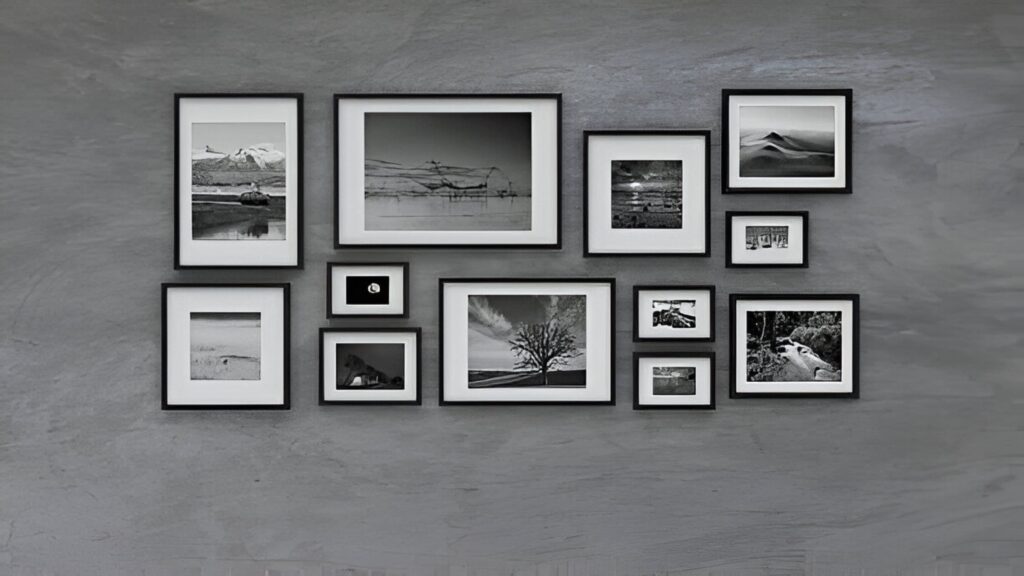
For a clean modern look, use slim black frames or white frames with simple mats. Mixing frame finishes can work, but limit the palette to two finishes if you want a restrained result. For more framing inspiration, see our framed wall art ideas.
As a starting point, try leaving about 2 to 4 inches (5 to 10 cm) between frames, then adjust for the size of the artwork and the wall. Above furniture, a gallery grouping often looks balanced when it is narrower than the furniture beneath it. These are flexible design guidelines, not fixed rules.
How to Plan and Hang Your Gallery Wall
- Measure the space. Note the wall width and any furniture, switches or lighting that affect placement.
- Arrange the pieces on the floor. Start with the largest frame and build around it.
- Make paper templates. Trace each frame onto paper and tape the shapes to the wall to test the layout.
- Check alignment and gaps. Step back and view the grouping from where you normally sit or enter the room.
- Hang securely. Use fixings suited to the wall material and the weight of each frame; check for concealed cables or pipes before drilling.
If you enjoy combining different art styles, our guide to mixing and matching gallery wall art offers more ways to make the collection feel connected.
Common Mistakes to Avoid
- Choosing everything at the same visual intensity: balance bold prints with quieter pieces.
- Hanging before planning: test the layout with templates to avoid unnecessary holes.
- Ignoring the furniture below: consider the entire wall, not just the artwork.
- Using frames that compete with the art: elaborate borders can distract from a minimalist collection.
- Forgetting lighting: glare on glass can hide details. Consider how daylight and lamps hit the display; see our gallery wall lighting guide.
Frequently Asked Questions
Can I mix different black and white art styles?
Yes. Photography, line drawings, abstract prints and typography can work together. Repeat a frame finish, keep the spacing consistent or choose a loose subject theme to tie them together.
How many pictures should a black and white gallery wall have?
There is no ideal number. Three pieces can be enough for a small wall, while a larger wall may accommodate six or more. Choose the number based on the available space and the sizes of the frames.
Should every frame be black?
No. Black frames create contrast, white frames feel understated, and natural wood adds warmth. A consistent mix of two finishes can look just as intentional as a matching set.
Does a black and white gallery wall work in a colorful room?
Absolutely. Monochrome art can provide a visual pause among colorful furniture and textiles. Repeating black or white elsewhere in the room can help the wall feel connected to the decor.
Final Thoughts
The best black and white gallery wall is not necessarily the most symmetrical or expensive one. Start with art you enjoy, choose a layout that suits your space and give each piece room to stand out. A few carefully arranged prints can make a stronger impression than a crowded collection.

One Comment
Pingback:
November 20, 2026 at 5:17 pm