
Gallery wall lighting can make framed prints, paintings and photographs easier to enjoy, but the brightest light is not always the best. A good setup reveals color and texture, limits distracting reflections and works with the room’s everyday lighting.
If you are wondering how to light a gallery wall at home, start by considering the size of the display, the artwork’s sensitivity to light, your budget and whether you can install ceiling or wall fixtures. This guide compares practical lighting options and explains how to aim them without overwhelming your art.
Gallery Wall Lighting: The Best Options at a Glance
| Lighting option | Best for | What to consider |
|---|---|---|
| Adjustable track lighting | Several frames or a gallery wall you rearrange | Visible track, installation and aiming |
| Picture lights | One focal artwork or a compact grouping | Coverage, cords or batteries |
| Recessed adjustable lights | Clean ceiling look | Installation access and beam direction |
| Wall sconces | Soft room ambience around a display | May not illuminate individual works evenly |
| Portable lamps | Renters and flexible arrangements | Shadows, glare and limited coverage |
Start With Three Layers of Light
Ambient lighting for the room
Ambient light is the general illumination from ceiling fixtures, lamps and daylight. It helps the space feel comfortable, but it may leave framed artwork in shadow. Keep it balanced so the gallery wall does not compete with a very bright overhead light.
Accent lighting for the artwork
Accent lighting directs attention to specific frames or to the wall as a whole. Adjustable ceiling fixtures, picture lights and track heads let you change where the light falls. The goal is enough definition to appreciate the art, not a harsh spotlight on every frame.
Task lighting nearby
A reading lamp or desk light may also illuminate part of your display. Test the effect from the sofa, doorway and other normal viewing spots. If the lamp creates reflections in glass, reposition it or aim it away from the frames.
How to Choose the Right Gallery Wall Lighting Fixtures
1. Adjustable track lighting
Track lighting is useful for a collection with multiple sizes and positions. Individual heads can be aimed at separate artworks or spread across the display. Choose compatible, adjustable fixtures and check the manufacturer’s installation requirements. If you regularly change your gallery layout, this flexibility can be worth the extra planning.

2. Picture lights
A picture light sits above a frame or group and creates a classic gallery-inspired look. Some models are hardwired, while others plug in or use batteries. Check the light’s width, projection and coverage before purchasing. A narrow picture light may beautifully illuminate one painting but leave the ends of a wide gallery wall dim.
3. Recessed ceiling lights
Adjustable recessed fixtures offer a discreet appearance, particularly in contemporary rooms. Fixed downlights are less flexible and can cause glare if they shine directly into glass. Recessed electrical work may require a qualified electrician and should follow local safety rules.
4. Wall sconces
Sconces add character and softer illumination on either side of a collection. They are usually better at framing the display than precisely lighting each piece. Keep enough distance between fixtures and frames so the hardware does not visually crowd the artwork.
5. Portable lamps and renter-friendly options
If you cannot change the ceiling wiring, try a floor lamp with an adjustable head or a small lamp placed to one side. Battery-powered picture lights may also work for short periods, though brightness, charging and runtime vary. Avoid attaching heavy fixtures with adhesive products unless the mounting system is specifically rated for that weight and surface.
How to Position Lights Without Glare
Reflections are one of the most common gallery wall lighting problems, especially with glass-covered photographs. A useful starting point for ceiling-mounted accent lighting is to aim the beam toward the artwork at roughly a 30-degree angle from vertical, then adjust by eye. This is a guideline, not a rule: ceiling height, frame depth, glass and viewing position all change the result.
- Turn on the lights you normally use in the room.
- Stand or sit where you usually view the gallery wall.
- Aim the light so it reaches the artwork without shining into your eyes.
- Look for bright reflections, hard shadows and uneven patches.
- Adjust the angle, fixture position or brightness until the display feels balanced.
Anti-reflective glazing may reduce reflections, but it is not the same as UV protection. Ask the framing supplier about the actual properties of the glazing if preservation is a concern.
Choosing Color Temperature and Light Quality
Color temperature affects the mood of a gallery wall. Warm white light, often around 2700K to 3000K, can feel inviting in living rooms. A more neutral white, around 3500K to 4000K, may suit a bright contemporary space. These are preferences, not strict rules for particular art styles.
Look for LEDs with good color rendering so the artwork’s colors appear natural. Compare how the art looks under the actual bulbs rather than assuming a temperature label guarantees accurate color. Dimmable fixtures can help you adjust brightness in the evening.
Protecting Artwork From Light Damage
Light exposure can fade or alter photographs, paper, textiles and some paints over time. Damage depends on both intensity and duration, so leaving a sensitive piece brightly lit all day can be a problem even when the fixture runs cool.
- Keep vulnerable artwork out of prolonged direct sunlight.
- Use curtains or blinds to manage strong daylight.
- Prefer appropriately selected LED fixtures over lamps that create unnecessary heat near artwork.
- Dim or switch off accent lights when they are not needed.
- For valuable or irreplaceable works, ask a qualified conservator or framing professional about suitable light levels and glazing.
UV-filtering glazing can help with some light exposure, but it does not prevent all fading. Never place a hot bulb very close to paper, fabric or other sensitive materials.
Lighting Ideas for Different Gallery Wall Layouts
A small gallery wall above a sofa
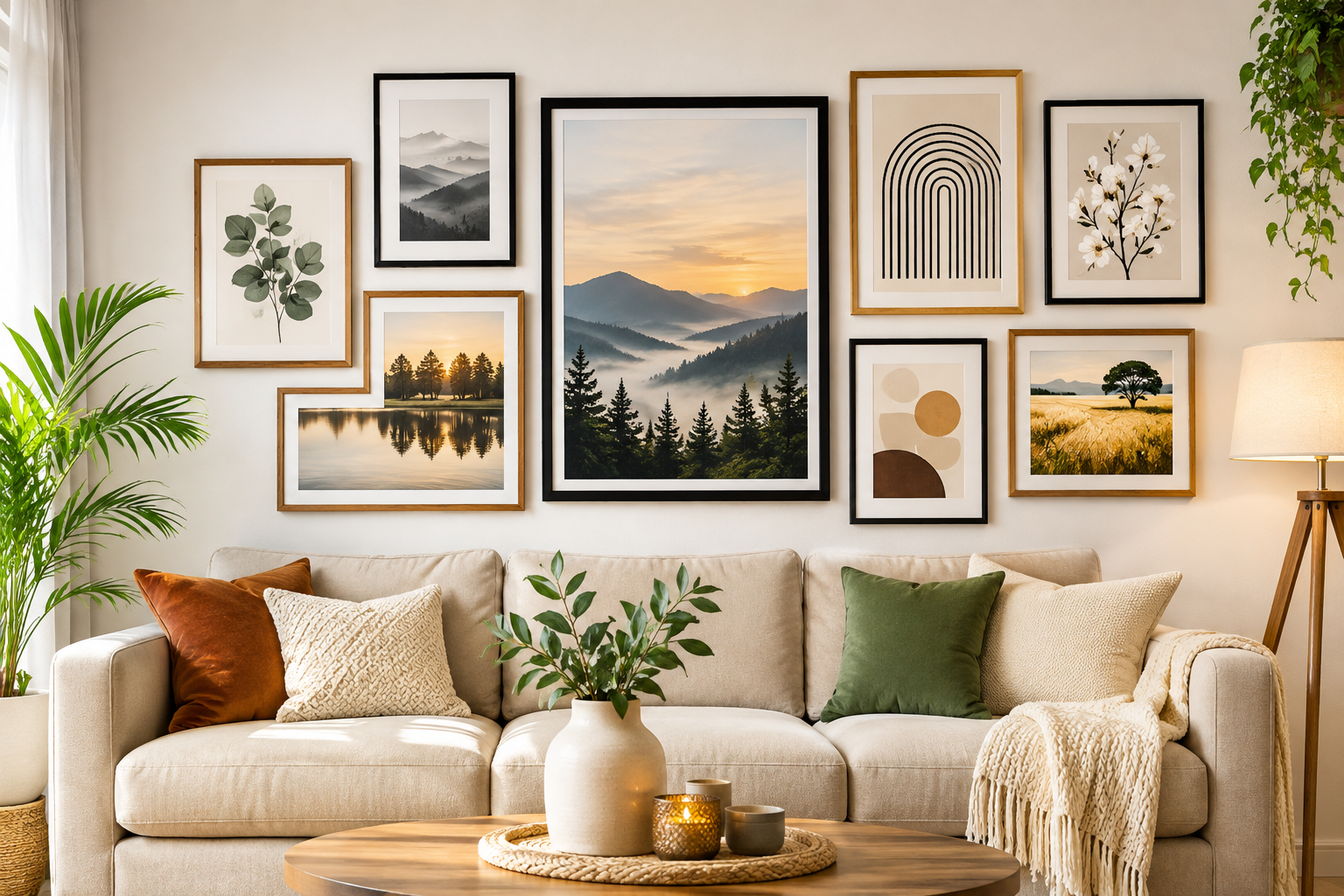
Try one adjustable ceiling fixture with a wide enough beam to cover the group, or a pair of subtle accent lights if the collection is spread out. Avoid glare from the main seating position.
A hallway gallery wall
Use evenly spaced adjustable fixtures or general lighting that washes across the wall. Because people view hallway art while moving, test reflections from several angles and avoid fixtures that stick out into the walkway.
A black and white photo wall
Soft, even illumination can help tonal details remain visible without creating bright hotspots on glazing. For layout inspiration, explore our black and white gallery wall ideas.
A textured or sculptural collection
A light coming from one side can emphasize raised textures through gentle shadows. Experiment with direction, but avoid extreme angles that hide important details or make the wall look patchy.
Common Gallery Wall Lighting Mistakes
- Too much brightness: strong hotspots distract from the art and may increase unnecessary exposure.
- Ignoring reflections: check the view from chairs and doorways, not just directly in front of the wall.
- Mixing inconsistent bulb colors: visibly different warm and cool lights can make a cohesive collection feel disjointed.
- Lighting only one frame: unless a focal point is intentional, distribute light so the rest of the arrangement does not disappear.
- Buying fixtures before planning: measure the gallery width, note power access and check the installation requirements first.
A Simple Gallery Wall Lighting Plan
- Measure the display: record the total width, height and location of your frames.
- Choose the effect: decide between an evenly lit wall and a few deliberate focal points.
- Pick the fixture type: compare track, picture, recessed and portable lighting based on your space and budget.
- Test light quality: look for comfortable brightness, consistent color and minimal reflections.
- Check preservation and safety: avoid excess heat, prolonged exposure and unsuitable wiring or mounting.
- Fine-tune after dark: adjust the lights when daylight is no longer influencing the room.
If you are still planning the artwork itself, our guide to mixing art styles on a gallery wall can help you create a cohesive arrangement before deciding where lights should go.
Frequently Asked Questions
What is the best lighting for a gallery wall?
Adjustable track lighting is flexible for multiple frames, while picture lights can work well for one prominent piece. The best option depends on the gallery’s size, the room and whether you can install permanent fixtures.
How do I light framed artwork without glare?
Use adjustable fixtures, test different angles and check reflections from your usual viewing position. Anti-reflective glazing may help, but fixture placement still matters.
Are LED lights safe for artwork?
Well-chosen LEDs can reduce unnecessary heat and offer good control, but any light can contribute to fading with enough exposure. Keep brightness and operating time appropriate for the artwork.
Should gallery wall lighting be warm or cool?
Warm white light often feels comfortable in a living room; neutral white can suit a brighter modern space. Choose consistent light with good color rendering and evaluate the effect on your actual artwork.
Can I light a gallery wall without hardwiring?
Yes. Plug-in lamps, some picture lights and suitable battery-powered fixtures offer options. Check mounting instructions, power access and practical runtime before buying.
Final Thoughts
The best gallery wall lighting helps you appreciate your collection without glare, harsh shadows or unnecessary light exposure. Start with the room’s ambient light, add adjustable accent lighting where it is useful and refine the setup from the places you actually sit or stand. A thoughtful arrangement usually looks better than simply making every frame brighter.

One Comment
Pingback:
November 20, 2026 at 4:49 pm