Easy canvas painting is a creative hobby you can start at home without expensive equipment or years of art lessons. A small canvas, a few acrylic colors and a couple of brushes are enough to make your first piece. You can paint a simple sunset, abstract shapes, flowers or a landscape and display the result as personal wall art.
This beginner’s guide covers the supplies you actually need, basic painting techniques, a step-by-step sunset tutorial, common mistakes and easy ideas to try next. The aim is to enjoy the process, not to make a perfect painting on your first attempt.
Why Try Easy Canvas Painting?
Painting gives you a chance to experiment with colors, practice observation and make something with your hands. Some people find the repetitive motions and focused attention relaxing, although the experience is different for everyone. It is also a flexible hobby: you can work for 20 minutes, take a break and return when the paint is dry.
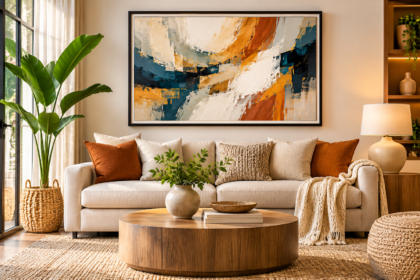
Another benefit is that your finished work can become part of your home decor. A small original painting above a desk or on a shelf adds a personal touch. For inspiration on displaying finished pieces, explore our modern wall art ideas for living rooms.

Easy Canvas Painting Supplies for Beginners
You do not need a large art kit. Start with these basics and add more materials only when you discover which techniques you enjoy.
| Supply | What to look for |
|---|---|
| Canvas | A small pre-primed stretched canvas or canvas board, around 8 × 10 or 9 × 12 inches |
| Acrylic paints | A beginner set with white, black, blue, yellow and red; add colors you love |
| Brushes | One medium flat brush, one round brush and one small detail brush |
| Palette | A reusable palette or suitable disposable mixing surface |
| Water and cloth | A rinse cup and paper towels or a reusable rag |
| Workspace protection | Old newspaper, a mat or a drop cloth |
Acrylics are convenient for many beginners because they are water-based and dry relatively quickly. Check product labels for handling, ventilation and cleanup instructions, especially when painting with children. An easel is optional; a protected tabletop works well for small canvases.

Set Up a Comfortable Painting Space
Choose a stable table with enough room for your canvas, paints and rinse water. Natural daylight can make color mixing easier, but a good desk lamp also works. Protect the table, wear clothes you do not mind getting paint on and keep food and drinks separate from your painting supplies.
Arrange your palette on the side of your dominant hand and keep brushes within reach. Close paint containers when not in use, rinse brushes before acrylic dries on them and dispose of paint waste according to the product instructions and local rules.

Five Basic Canvas Painting Techniques to Learn
1. Blocking in large shapes
Begin with the biggest areas of color instead of tiny details. For a landscape, paint the sky and ground first. This helps you see whether the composition feels balanced before investing time in finishing touches.
2. Blending while paint is wet
To create a soft transition, place two colors beside each other and gently work the boundary with a clean brush while both are still workable. Acrylic paint can dry quickly, so practice on a small section rather than the entire canvas at once.
3. Layering after drying
Let one layer dry before adding a contrasting shape or highlight. This helps keep colors clear instead of muddy. Drying time depends on paint thickness, temperature and the brand of paint.
4. Dry brushing for texture
Remove most of the paint from your brush, then lightly drag it over a dry surface. The broken strokes can suggest clouds, grass, wood grain or rough stone.
5. Adding details last
Use a small round brush for branches, stars, petals and outlines after the main shapes look right. Details are easier to control when the underlying layers are dry.

Step-by-Step Easy Canvas Painting Tutorial: A Sunset Silhouette
This beginner project uses broad color bands and a simple foreground shape. You can finish the active painting in a short session, but allow additional time for drying.
Step 1: Prepare your canvas
Place a pre-primed canvas on your protected table. Most ready-to-paint canvases do not need an extra coat of gesso. If your canvas is unprimed, follow the surface preparation instructions supplied with it.
Step 2: Choose your colors
Put small amounts of yellow, red, blue, white and black on your palette. Mix a warm orange from red and yellow, and a pale blue by adding white to blue. Start with small quantities so you do not waste paint.
Step 3: Paint the sky
Use a medium flat brush to paint yellow near the horizon, orange above it and blue toward the top. Gently soften the borders while the colors are still wet. If the colors become muddy, let the layer dry and try again with fresh paint.
Step 4: Add a horizon
Once the sky is dry enough, paint a simple dark line or low hill across the bottom third of the canvas. You can use a mix of blue and black rather than pure black for a softer silhouette.
Step 5: Paint a tree or plant silhouette
With a small brush, add one curved trunk and a few branches rising from the dark foreground. Keep the shape simple. A handful of branches is often more effective than trying to paint every leaf.
Step 6: Add finishing touches
If you like, paint a small sun near the horizon or a few distant birds. Step back to check the balance. Stop when the image feels complete rather than filling every empty space.
Step 7: Let it dry before displaying
Place the painting somewhere clean and well ventilated, away from pets and curious hands. Follow the paint maker’s drying guidance before handling, stacking, varnishing or framing the work.

Seven More Easy Canvas Painting Ideas
- Abstract color blocks: paint overlapping rectangles in three complementary colors.
- Minimalist mountains: layer simple triangular peaks in light and dark shades.
- Single flower: use a round brush to create petals around a central dot.
- Night sky: paint a deep blue background and add small white stars when dry.
- Ocean horizon: create broad blue bands with a thin line separating sea and sky.
- Leaf silhouettes: paint a pale background and add dark botanical shapes.
- Geometric wall art: use painter’s tape on a dry surface to make crisp shapes, then remove it carefully.
For a coordinated set, paint two or three small canvases using the same limited color palette. If you plan to hang them together, our wall art sizing guide can help you choose an arrangement that fits your room.
Common Beginner Mistakes and How to Fix Them
Using too much paint at once
Thick paint can be harder to control and may take longer to dry. Start with small amounts and build coverage in layers. Some texture is fine if that is the effect you want.
Overmixing colors
Mixing many colors together often produces dull shades. Begin with two colors at a time, clean your brush between mixtures and keep a small area of your palette for testing.
Trying to blend dried acrylic
Once acrylic has dried, brushing over it will not blend the old layer as if it were wet. Instead, apply a fresh thin layer and blend that while workable.
Starting with details
Painting tiny features before the background can make composition harder. Work from large shapes to smaller ones, and save highlights for last.
Not cleaning brushes promptly
Acrylic paint can harden in bristles. Rinse brushes during breaks, clean them according to the paint instructions and reshape the bristles before drying.

How to Improve Your Painting Skills Without Pressure
Try painting the same simple subject twice, changing just one thing such as the color palette or brush size. Save photos of each attempt so you can notice progress. Looking at everyday objects, landscapes and your own reference photographs can also help you understand shapes and light.
You do not need to paint every day. Short, enjoyable sessions are easier to maintain than ambitious projects that become frustrating. If you want to make paintings for your walls, start by matching the colors to your space and choosing a size that feels comfortable to work on.

Frequently Asked Questions About Easy Canvas Painting
What is the easiest paint to use on canvas for beginners?
Student-grade acrylic paint is a practical starting point for many beginners because it is widely available, water-based and generally dries faster than oil paint. Choose products labeled for your age group and follow the safety instructions.
What canvas size should I start with?
An 8 × 10 or 9 × 12 inch canvas is manageable for a first project. A larger canvas is fine if you prefer broad brushstrokes, but it usually requires more paint and workspace.
Can I paint over a mistake?
Often, yes. Let the acrylic layer dry, then cover the area with a suitable new layer. Some dark colors may need additional coats for full coverage.
Do I need to prime a canvas before acrylic painting?
Most pre-primed canvases sold for acrylic painting are ready to use. Unprimed surfaces may need preparation, so check the canvas packaging.
Can easy canvas painting help me relax?
Many people enjoy painting as a calming creative activity, but results vary. Treat it as a hobby rather than a guaranteed treatment for stress or anxiety.
Do I need an easel?
No. A protected flat table is enough for small canvases. An easel can be useful later if you prefer painting upright.
How do I hang my finished canvas painting?
Wait until it is adequately dry, then use hanging hardware suitable for its weight and construction. Keep it away from persistent dampness and strong direct sunlight. For display inspiration, see our gallery wall ideas.
Final Thoughts
Easy canvas painting is about exploring color, building confidence and enjoying a creative project at your own pace. Begin with a small canvas, a few acrylic paints and one simple subject. Each attempt teaches you something, and your finished artwork can become a meaningful addition to your home.