
Choosing wall art for your living room starts with three practical decisions: where it will hang, how large it should be and what you want to spend. A beautiful print can look lost above a wide sofa if it is too small, while an oversized piece can overwhelm a narrow wall. This guide helps you compare styles, materials, sizes and costs before buying.
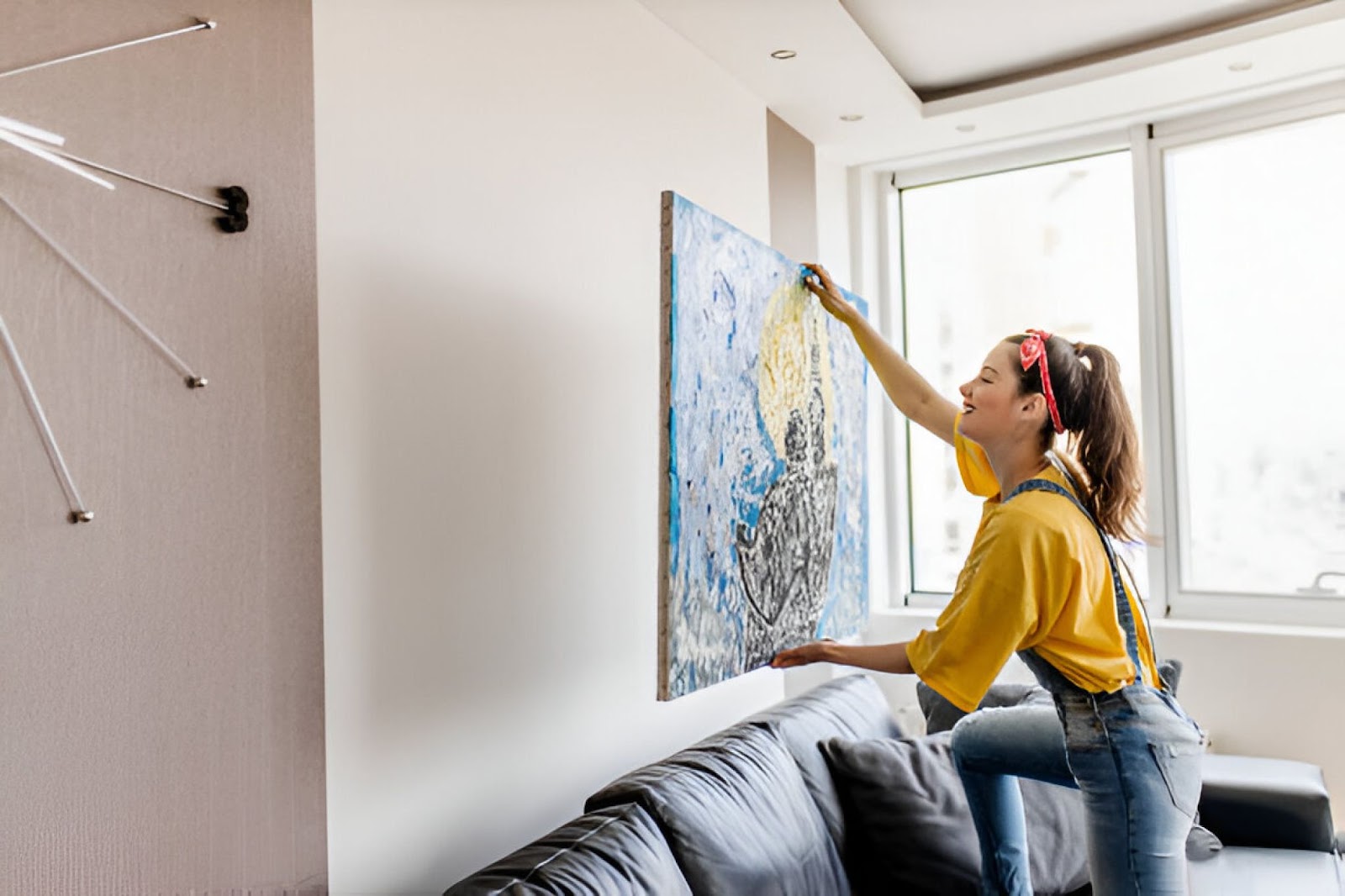
1. Measure your living room before choosing art
Start by identifying the wall you want to decorate. Is it above the sofa, over a console, beside a window or along a hallway opening? Measure the available wall area and the furniture beneath it. Note nearby lamps, shelves, vents and doors so the artwork does not compete with them.
For a large, open wall, one substantial artwork can create a clear focal point. On a narrow wall, a vertical print or two smaller pieces may be easier to balance. If you have several artworks, lay them out on the floor first to test the spacing and overall shape.
Buying tip: Mark the intended artwork dimensions on the wall with painter’s tape or paper before ordering. Check the frame’s outside dimensions, not just the print size.
2. Choose wall art that suits your living room style
Think about the furniture, lighting and atmosphere you already have. You do not need to match every colour or buy artwork from a single collection. A few repeated details are often enough to make a room feel coordinated.
- Modern or minimalist: simple line drawings, abstract shapes, restrained palettes and slim frames.
- Traditional: landscapes, botanical prints, portraits and warmer frame finishes.
- Rustic or natural: textured canvas, wood wall art and earthy colours.
- Eclectic: a gallery wall combining photographs, prints and personal pieces with a shared colour or frame detail.
Choose artwork you enjoy looking at, rather than relying only on trends. For a more personal arrangement, see our gallery wall planning guide.
3. Pick the right wall art size
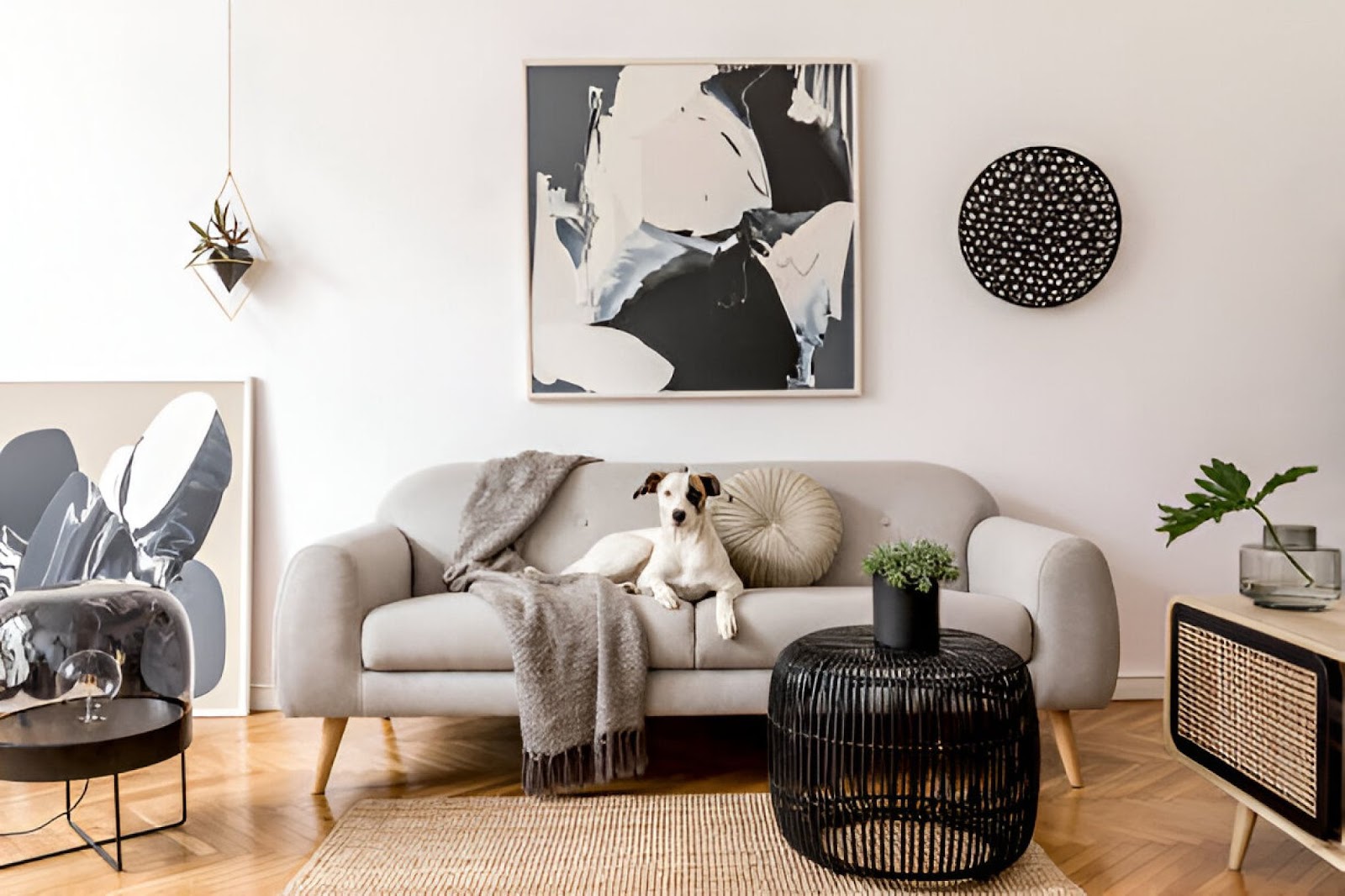
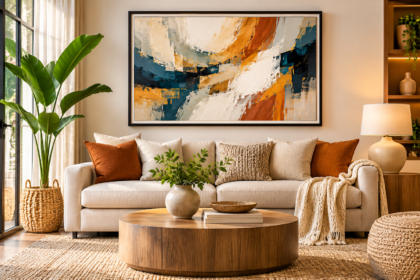
A useful starting point for artwork above a sofa or console is a total display width of roughly two-thirds to three-quarters of the furniture width. This is a design guideline, not a fixed rule. A group of framed prints can fill the same overall width as one large canvas.
For example, if your sofa is 84 inches (213 cm) wide, a display around 56 to 63 inches (142 to 160 cm) wide may feel balanced. Leave enough room around the arrangement so it does not crowd windows, wall lights or shelves.
Check the artwork’s height as well as its width. A tall canvas may feel too close to the sofa even when its width is appropriate. For detailed measurements, see our wall art size guide.
4. Coordinate wall art colours with your room
Look at your sofa, rug, cushions and curtains. Artwork can repeat one or two existing colours for a calm look, or introduce a contrasting accent into a neutral room. A blue print, for instance, may connect with a blue cushion without matching it exactly.
Consider the light at different times of day. Dark artwork may stand out on a pale wall, while subtle prints can look washed out in a dim corner. If you are unsure, place a sample image or paper mock-up in the intended location before buying.
5. Compare canvas, framed prints, wood and metal
| Material | Good for | Check before buying |
|---|---|---|
| Canvas | Large statement pieces and softer, frameless looks | Print quality, stretcher depth and hanging hardware |
| Framed paper print | Photography, illustrations and gallery walls | Frame dimensions, glazing and whether a mat is included |
| Wood wall art | Natural texture and rustic or warm interiors | Weight, finish and care instructions |
| Metal wall art | Sculptural shapes and contemporary accents | Sharp edges, mounting points and finish |
Compare materials based on your room and maintenance preferences, not just appearance. If you are deciding between textured pieces, our wood vs metal wall art comparison explains the trade-offs.
6. Set a realistic wall art budget
Decide your total budget before shopping, including the artwork, frame, delivery and mounting supplies. A low-priced print may become more expensive once you add a custom frame. Likewise, a large canvas may cost more to ship or hang safely.
- Lower-cost option: an unframed print in a standard size with a ready-made frame.
- Mid-range option: a larger canvas or a coordinated set of framed prints.
- Higher-cost option: original artwork, custom framing or a substantial handmade piece.
Before ordering, check the seller’s return policy, exact dimensions, material description, colour accuracy notes and hanging requirements. Avoid choosing a piece solely because it looks impressive in a staged product photograph.
7. Final checklist before you buy
- Measure the wall and the furniture below it.
- Check the full outside dimensions, including the frame.
- Choose a style and palette that you genuinely like.
- Compare the artwork material and care needs.
- Include framing, delivery and hanging costs in your budget.
- Check the seller’s return policy and mounting instructions.
Frequently asked questions
Can I mix different art styles and frames in one living room?
Yes. Repeat a shared colour, subject or frame finish to help different pieces feel connected. Keep the spacing deliberate and test the arrangement before hanging.
Should wall art match the sofa?
Not exactly. It can pick up a colour from the sofa or rug, or provide a contrasting accent. Aim for a relationship between the pieces rather than an exact match.
How can I include family photographs?
Use a small gallery wall, picture ledge or matching frames. Mix personal photographs with artwork if you want a more collected look. See our family photo gallery wall ideas.
Is one large artwork better than several small ones?
Neither is automatically better. One large piece is simpler to position; several smaller pieces offer flexibility. Compare the total arrangement width and the amount of visual detail you want.
Final thoughts
The best wall art for your living room fits the space, reflects your taste and works within your budget. Measure first, compare materials and check the complete purchase cost. If you also want to explore how artwork changes the atmosphere of a room, read our guide to wall art and mood.
3 Comments
sun screen stor perde
August 11, 2025 at 2:58 pmThis was beautiful Admin. Thank you for your reflections.
logo baskılı stor perde
August 11, 2025 at 5:07 pmI just like the helpful information you provide in your articles
Pingback:
November 20, 2026 at 11:19 pm