Wondering how to arrange wall art for your living room without making the space feel crowded? Start with the furniture, not the artwork. Measure the wall, decide on a focal point and test your layout before putting holes in the wall. A single large piece, a balanced pair or a gallery wall can all work when the scale and spacing suit the room.
This guide explains practical hanging heights, alignment, spacing and arrangement ideas. If you are still choosing what to buy, start with our living room wall art buying guide and wall art size guide. Then use the steps below to plan the display.
Table of Contents
Understanding Your Space
If you have already chosen your wall art, that means you have understood your living room space. So, it’s essential that before you choose one, you measure the size and layout of the space to see what size art will fit best. This lets you know your room well and what art sizes won’t make the area feel too full or too empty. Bigger spaces require large pieces, unlike the smaller ones that need more miniature art.
Also, the layout of your furniture in the room can help guide your choices. Your art should mix well with what you already have instead of clashing with it. Large pieces are ideal above a sofa or mantle, while smaller works can fill in tighter spaces. Picking the right spot for your art will make your living room just right and easy on the eyes.
How to Choose the Right Wall Art For Living Room?
Picking the perfect wall art can uplift your room and reflect your flair. Here’s a guide to help you in finding the most suitable artwork for your home :
Consider the Size:
Picking out wall decorations involves crucial sizing decisions. Suppose your wall is big and bare; one large, eye-catching piece might do the trick. If you prefer more variety, think about a gallery wall with several smaller items.
If the wall isn’t as big, go with mid-sized or even smaller art so it doesn’t ruin the place. Your chosen art pieces should enhance both the wall’s size and the furniture in the room.
Match the Color Scheme:

Your art wall’s colors need to harmonize well with your living room’s current color scheme. If your room is filled with neutral tones, a bright and colorful work of art can grab attention. But, if your area already pops with bold colors, then quieter, softened artwork could help keep things even.
The colors of your wall art don’t need to mirror those in your room. They should either enhance the room’s colors or offer a deliberate contrast, giving the room a harmonious feel.
Think About the Style:
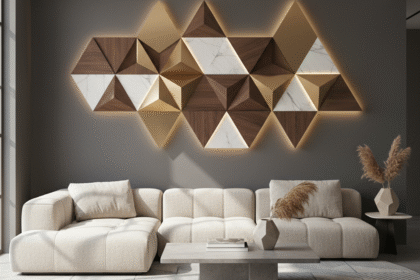
Your wall art should match your living room’s style. Modern rooms suit abstract or minimalist art and geometric patterns. If your living room has a more traditional feel, think of landscape paintings, portraits, or detailed sketches. For eclectic or bohemian rooms, choose bold, colorful, and textured pieces. The goal is to pick art that complements, not clashes with, your room’s aesthetic.
Consider the Theme or Mood:
Wall art for living room can greatly influence a room’s energy. Decide on the feeling you want before choosing a wall art. If you want a calm and peaceful living room, try art featuring calm colors, like landscapes or seascapes. If you want excitement and a lively tone, opt for vibrant, abstract works with bold colors. The artwork’s theme should match the vibe or narrative you want in your living room.
Frame and Material:
Your wall art’s frame and materials can upgrade your room’s appearance. Wood frames give a cozy feel, ideal for old-fashioned or country-style rooms. In contrast, a shiny metal frame adds a fresh, up-to-date feel. Choosing no frame offers a laid-back and chill vibe. The frame needs to go well with your room’s decoration and not overpower the art. Think about the frame’s finish and texture, as it can affect the whole look.
Tips for Layout and Positioning Of The Wall Art
The layout and positioning of wall art for living room can make a big difference in your living room’s overall look. Here are some tips to help you get it right :
Hang Art at Eye Level :
Art placement is usually centered around eye level. This means the middle of your art piece should sit about 57-60 inches off the ground. This places your wall art at a pleasant height for most to view and directly draws attention to any room.
Align with Furniture :
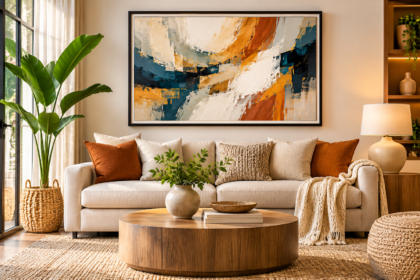
If you have a wall art to hang over your sofa or console table, Make sure to make it roughly two-thirds to three-quarters the width of the furniture piece. A space of 6 to 8 inches between the art’s bottom and the furniture’s top should be left. It creates balance and keeps things proportional.
Group Art with Equal Spacing:
Keeping a uniform space between each piece of art, works best, around 2-3 inches. With a gallery wall, even spaces can give a neat look. If you want something unique, try varying the space for an eclectic feel.
Create a Focal Point:
The big wall art for living room makes great centerpieces in a room. Put the biggest or most striking one on the main wall. This is a spot where our eyes go naturally, like above the couch or fireplace. Add smaller artworks, making sure they enhance the centerpiece without fighting for the limelight.
Balance Proportions:
When you’re setting up an art collection, mix sizes to balance how they look. The biggest piece works well in the middle or at a spot that draws attention. Then, position the smaller ones around it. The goal is to create a visually balanced arrangement.
A practical layout checklist before hanging
- Measure the available wall space and the width of the sofa or console below it.
- For art above furniture, try an overall display width of roughly two-thirds to three-quarters of the furniture width as a starting point, then adjust for your room.
- For a gallery wall, place frames on the floor or make paper templates. Keep gaps reasonably consistent, but allow larger pieces room to breathe.
- Check the height from your normal seated viewpoint, not only while standing. Avoid placing artwork so low that people can bump it when sitting down.
- Use wall anchors and hanging hardware rated for the artwork’s weight and your wall material. Adhesive strips have limits and are not suitable for every frame or surface.
- Take a photo of the trial arrangement and make adjustments before installing hooks.
For inspiration on grouping different frames and prints, see our guide to mixing art styles in a gallery wall.
Conclusion:
In conclusion, hanging pictures on your living room walls combines imagination, fashion, and skill. Note things like size, hue, and position, and your ordinary room becomes a custom exhibit showing off your personal style. You need to know your room’s layout, balance its sizes, and create attention spots. The correct setup can totally boost your living room’s vibe. Using these guidelines, you can show your art like an expert and create an amazingly beautiful, well-balanced area.
FAQ :
Is it okay to hang art above windows or doors?
Yes, you can hang art above windows or doors to fill vertical space, especially in rooms with high ceilings. Just ensure the art doesn’t feel out of place by aligning it with other design elements.
How can I change my wall art display without damaging the walls?
Use removable adhesive hooks or strips instead of nails to prevent holes and damage. Another option is to use a gallery rail or a picture hanging system that allows you to move art easily without drilling into the wall.